
Novacolor Marmorino KS is a lime-based decorative plaster that creates a satin finish on interior and exterior walls. This Italian mineral coating combines crushed marble, aged lime putty, and natural binders to produce a smooth, luminous surface that catches light without the high gloss of polished Venetian plaster. You can apply it in thin layers to achieve a subtle sheen that works for both contemporary flats and period properties.
This guide covers everything you need to know about Marmorino KS. You’ll learn why architects specify this material for high-end projects, how to apply it properly for consistent results, and what technical specifications matter for different environments. We’ll also explore the colour palette, texture options, and maintenance requirements that keep this finish looking fresh for years. Whether you’re a designer evaluating finishes or a homeowner planning a renovation, you’ll find practical information to help you decide if this plaster suits your project.
Why architects specify Marmorino KS
Architects choose this plaster because it delivers consistent results without the variability that often comes with traditional lime finishes. You get a specification-ready product that meets building regulations, arrives with technical data sheets, and produces predictable outcomes across different application teams. This reliability matters when you’re coordinating multiple trades on a tight programme and can’t afford surface failures or colour mismatches between batches.
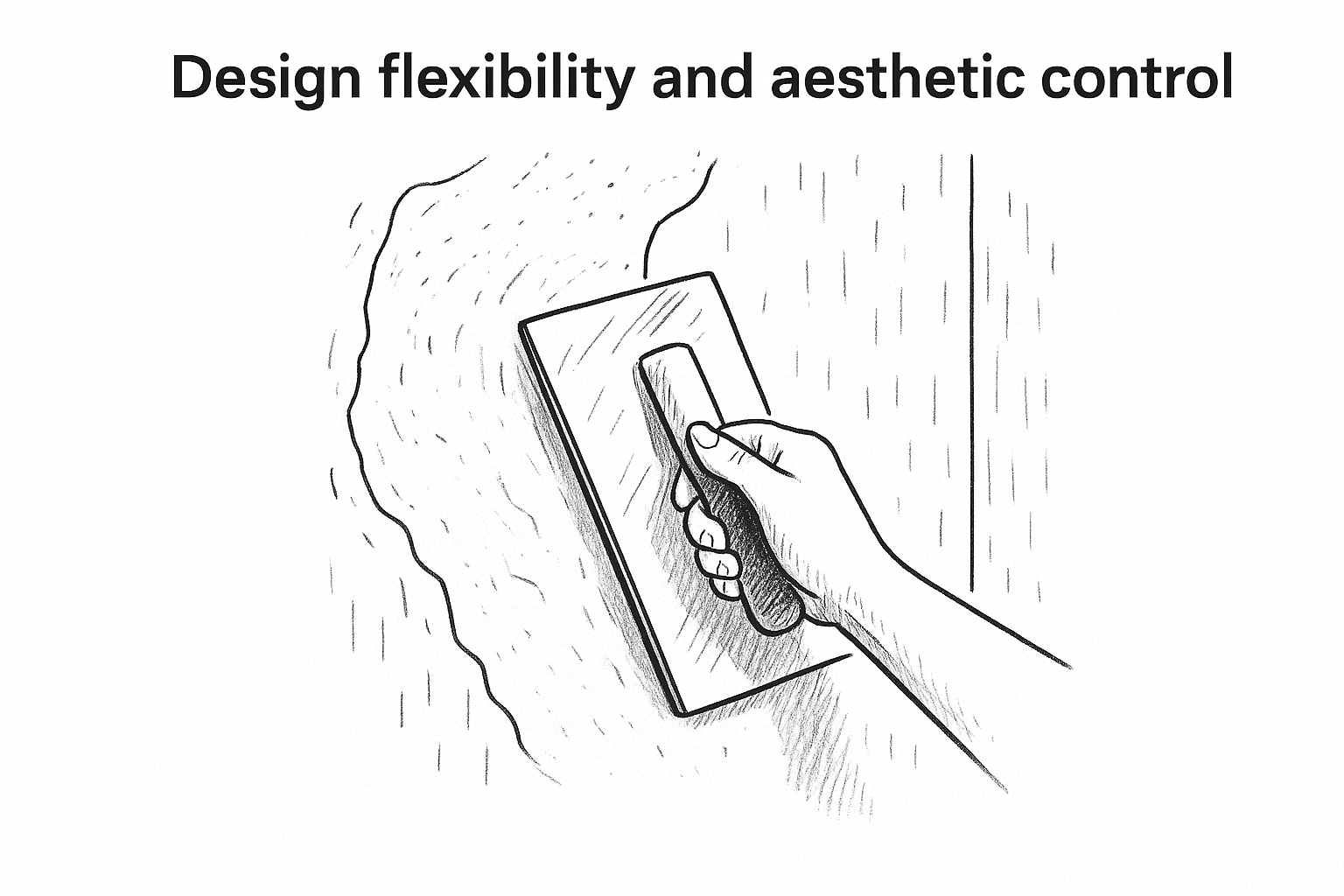
Design flexibility and aesthetic control
The material gives you complete control over sheen levels by adjusting your trowel pressure and application technique. You can create a subtle satin glow in reception areas, increase the polish in statement lobbies, or keep the finish more matte in bedrooms. This versatility within one product eliminates the need to specify multiple materials for different zones, which simplifies procurement and reduces on-site coordination headaches.
Novacolor Marmorino KS works equally well in contemporary minimalist schemes and heritage restoration projects. The lime base means it breathes naturally, making it suitable for older buildings with solid walls that need vapour permeability. Modern developments benefit from its seamless application over large wall areas, creating uninterrupted surfaces that enhance spatial flow. You won’t find visible joints or seams that break up clean architectural lines.
Performance across project types
This plaster performs reliably in high-humidity environments like boutique hotel bathrooms and spa changing rooms. The lime content provides natural antimicrobial properties that prevent mould growth, reducing long-term maintenance costs for your clients. You can specify it with confidence in residential wet rooms, restaurant kitchens, and healthcare facilities where hygiene standards dictate material selection.
"The breathability of lime-based finishes makes them particularly valuable in projects where moisture management and indoor air quality are design priorities."
Exterior applications benefit from the plaster’s weather resistance and ability to handle thermal movement. You’ll see it specified on rendered facades, courtyard walls, and covered outdoor spaces where standard paint systems would crack or peel. The mineral composition means it won’t fade in UV exposure, maintaining colour integrity throughout the building’s lifecycle.
Budget predictability and specification ease
Most suppliers provide clear coverage rates of approximately 1.2 to 1.5 square metres per kilogram, depending on your desired texture depth. This accuracy helps you calculate material quantities during the tender stage and avoid cost surprises during construction. You can produce reliable budget forecasts for clients without the guesswork that comes with artisan finishes applied by individual craftspeople.
The product arrives in ready-to-use 25kg tubs that require no on-site mixing beyond basic stirring, which reduces labour time and the risk of application errors. Your contractor won’t need to source separate pigments, binders, or additives that could introduce batch variations. This simplicity speeds up installation programmes and gives you more control over project timelines, particularly valuable in refurbishment work where access windows are limited.
How to apply the plaster for a satin effect
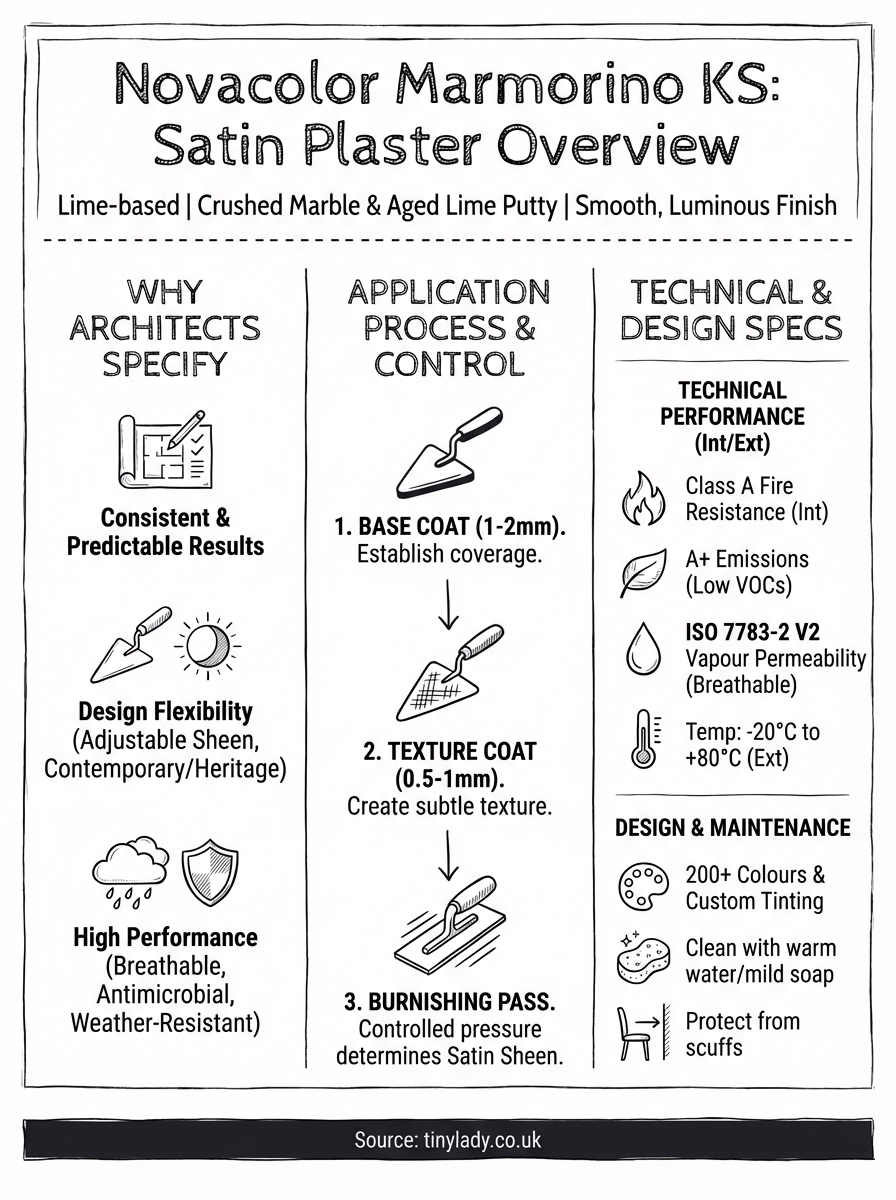
You achieve the satin finish of Novacolor Marmorino KS through controlled trowel pressure and precise timing between coat applications. The process requires three distinct layers applied over a properly prepared substrate, with each coat building the depth and luminosity that defines this plaster. Your base coat establishes coverage, the second layer creates texture, and the final pass determines the sheen level through burnishing technique.
Surface preparation and first coat application
Start with a clean, stable substrate that’s free from dust, grease, and loose material. You can apply the plaster directly over sound plasterboard, existing render, or previously painted surfaces once you’ve primed them with an appropriate basecoat. Smooth out any major imperfections before you begin, as this plaster will highlight rather than hide substrate defects.
Apply the first coat at approximately 1-2mm thickness using a stainless steel trowel held at a 15-degree angle. Work in sections of roughly two square metres to maintain a wet edge and avoid visible joins. This initial layer dries within four to six hours depending on ambient temperature and humidity levels, giving you a workable window for the second application. Don’t rush this stage, as inadequate coverage creates patchy areas that show through subsequent layers.
Building texture and achieving the satin sheen
Your second coat goes on thinner than the first, roughly 0.5-1mm thick, applied in irregular crosshatch strokes that create subtle texture variation. Wait at least twelve hours before this application to ensure the base layer has cured properly. The irregular trowel marks you leave at this stage will catch light differently across the surface, producing the characteristic depth of marmorino finishes.
"The burnishing stage determines whether your finish appears subtly satin or approaches a polished sheen, making trowel pressure your most critical variable."
Apply the final burnishing pass once the second coat reaches a leather-hard state, typically 30 to 60 minutes after application. Press firmly with your trowel at a shallow angle, working in circular motions to compress the surface and bring out the natural sheen. You control the gloss level directly through how hard you press and how many passes you make over each area. Light pressure creates a softer satin effect, while increased compression produces more pronounced lustre.
Technical specifications for interiors and exteriors
Novacolor Marmorino KS meets Class A fire resistance standards for interior applications, making it compliant with building regulations in commercial settings like hotels, restaurants, and public buildings. The plaster contains no volatile organic compounds and carries an A+ emissions rating, which satisfies ventilation requirements in spaces where air quality affects occupant comfort. You’ll find these certifications documented in the technical data sheet, giving you the specification evidence needed for building control approval.
Interior performance specifications
The material achieves ISO 7783-2 Class V2 water vapour permeability, allowing walls to breathe naturally while maintaining surface integrity. This specification matters most in period properties with solid wall construction, where trapped moisture can cause render failure or internal damp issues. Your clients benefit from natural humidity regulation that prevents condensation build-up in bathrooms and kitchens without requiring mechanical ventilation systems.
Interior applications require a minimum substrate temperature of 5°C during application and curing, which affects your installation schedule in unheated buildings during winter months. The plaster reaches full cure within 28 days, though you can decorate or furnish rooms after just seven days when surface hardness allows normal use. Coverage rates average 1.2 to 1.5 square metres per kilogram for the typical three-coat system, helping you calculate accurate material quantities from floor plans.
Exterior durability requirements
External facades need additional water-repellent treatment applied after the marmorino has fully cured to protect against driving rain and freeze-thaw cycles. You apply this protective coat using Novacolor’s siloxane-based sealer, which penetrates the surface without altering the satin finish or blocking vapour permeability. The combined system withstands temperature fluctuations from -20°C to +80°C, making it suitable for the UK climate where seasonal variation affects render performance.
"Proper substrate preparation and adequate curing time determine whether your exterior installation survives ten years or requires remedial work within three."
Exterior specifications require a minimum two-coat render base of at least 10mm thickness before you apply the marmorino layers. This substrate must cure for at least 21 days to avoid alkalinity issues that cause surface discolouration or premature failure. The finish resists UV degradation without colour fade, maintaining its appearance throughout the typical 15 to 20-year maintenance cycle for rendered facades.
Designing with colour and texture variations
Novacolor Marmorino KS arrives in over 200 pre-mixed colours from the manufacturer’s Colorificio collection, giving you a palette that ranges from warm earth tones to cool metallics. You can also custom tint the base using universal colorants, though factory-mixed options guarantee batch consistency across large projects. The natural lime content means colours appear softer and more muted than synthetic paints, creating depth that changes throughout the day as natural light shifts across your walls.
Selecting colours for different lighting conditions
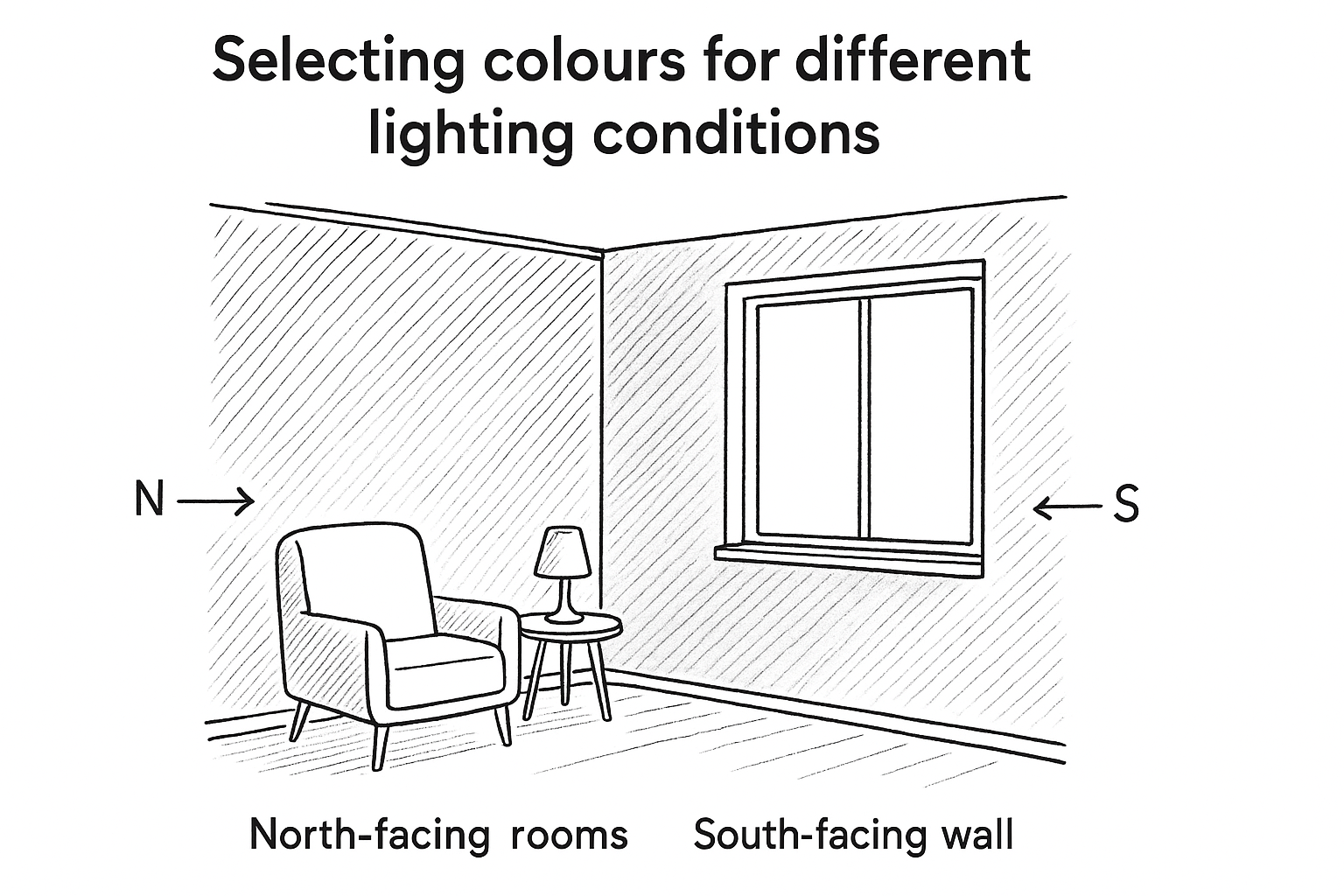
North-facing rooms benefit from warmer hues like ochre, terracotta, or soft beige that compensate for cooler daylight. These tones prevent spaces from feeling clinical or unwelcoming, particularly in basement conversions or rooms with limited window area. South-facing walls can handle cooler greys and whites without appearing stark, as abundant sunlight brings out the subtle variations in the lime-based pigments.
Artificial lighting affects how colours read in commercial spaces where natural light plays a minimal role. Test your chosen shade under the actual lighting specification before committing to full application. LED installations with high colour rendering indices above 90 CRI show the plaster’s natural variations more accurately than standard fluorescent tubes, which can flatten the finish and reduce its characteristic depth.
Creating texture through application technique
You control surface texture by varying your trowel angle and stroke direction during the second coat application. Tight circular motions produce a fine, almost smooth appearance suitable for minimalist interiors, while broader crosshatch strokes create visible movement that adds interest to large wall expanses. The technique you choose affects how light plays across the surface, with rougher textures catching more shadow detail than polished applications.
"Your trowel technique determines whether the finish reads as a calm backdrop or becomes a textured feature that draws attention across the room."
Layering different tones of the same colour family creates subtle depth that appears almost three-dimensional under changing light. Apply a darker base coat, then burnish a lighter tone over the top, allowing the underlying shade to show through in the texture valleys. This approach works particularly well in reception areas where you want visual interest without pattern or decoration that might date quickly.
Maintenance tips for a durable finish
Your Novacolor Marmorino KS surface requires minimal ongoing maintenance compared to painted walls, though proper care extends its lifespan and preserves the satin sheen. The lime-based composition naturally resists mould and mildew growth, reducing the need for chemical cleaners that might damage the finish. You’ll find this plaster easier to maintain than traditional paint, which shows scuffs and marks more readily on high-traffic walls.
Regular cleaning methods
Clean the surface using warm water and a soft microfibre cloth for routine dust removal and minor marks. Avoid abrasive scrubbing pads or harsh detergents that strip away the natural sheen you worked to achieve during application. Light circular motions lift most everyday dirt without affecting the burnished surface, keeping your walls looking fresh between deeper cleans.
Stubborn marks respond to a solution of mild pH-neutral soap diluted in water, applied sparingly with a damp cloth. Test any cleaning product on an inconspicuous area first to ensure it doesn’t alter the finish or create discolouration. Rinse the area thoroughly with clean water after cleaning and pat dry with a soft towel to prevent water spots from forming as the surface dries.
Protecting the surface from damage
Position furniture at least 5cm away from walls in high-use areas to prevent scuff marks from repeated contact. The plaster’s hardness increases as it cures, but chair backs and table edges can still damage the surface through constant friction. Wall protectors or felt pads on furniture legs provide additional insurance against accidental knocks that might chip or mark the finish.
"Your plaster reaches maximum hardness after 28 days of curing, making the first month the most vulnerable period for surface damage."
When to reseal or refresh the finish
Exterior installations need resealing every five to seven years depending on weather exposure and facade orientation. You apply a fresh coat of siloxane-based sealer without removing the existing plaster, which refreshes the water repellency and maintains weather resistance. Interior surfaces rarely require resealing unless you’ve cleaned them excessively with harsh products that have degraded the natural protection.
Minor scratches or chips can be spot-repaired by applying a thin layer of matching plaster and burnishing it to blend with the surrounding area. Keep a small quantity of your original batch for these touch-ups, as colour matching later proves difficult even within the same product line.
Final thoughts on using Marmorino KS
Novacolor Marmorino KS delivers reliable performance across both residential and commercial projects when you follow proper application methods and maintenance protocols. The plaster’s versatility makes it suitable for contemporary minimalist schemes and heritage restoration work alike, while its breathable lime composition addresses moisture management naturally without mechanical intervention. You get a specification-ready product that simplifies coordination across design teams and contractors.
Your success with this material depends on adequate substrate preparation and respecting the curing timeline between coats. Rushing the application process creates inconsistent results that undermine the finish’s durability and aesthetic quality. Budget for professional installation if you lack experience with decorative plasters, as the burnishing technique requires skill to achieve uniform sheen across large wall areas.
If you’re planning a surface transformation in London and want specialist finishing that combines technical expertise with creative vision, browse our portfolio of completed projects to see how we approach decorative plaster installations.